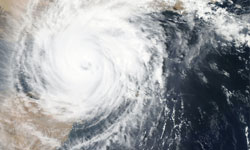
We can watch a hurricane coming for a week, and the largest still rank among the deadliest disasters humanity has ever recorded.
Wind gets the headlines; water does the killing
Hurricane categories measure wind, but it is the water that fills the morgues. Storm surge — the dome of seawater a hurricane pushes ashore — accounts for the majority of deaths. The 1970 Bhola Cyclone drowned an estimated 500,000 people in low-lying Bangladesh.
Inland flooding from a slow, rain-heavy storm is the second great killer, sometimes hundreds of miles from where the eye made landfall.
“Hide from the wind, run from the water.”
Days of warning, and still deadly
Modern forecasting can track a hurricane for a week, yet people still die because evacuation is hard — it's expensive, traffic-choked, and easy to second-guess. The deadliest modern storms pair a strong surge with a population that waited too long.
If you live in a surge or evacuation zone, the decision to leave should be made on the forecast, not on what you can see out the window.
Does the Northwest get hurricanes?
True tropical hurricanes don't reach Oregon, but their remnants and powerful Pacific windstorms do. The 1962 Columbus Day Storm — fed by a dying typhoon — remains one of the most destructive windstorms in U.S. history, with gusts over 100 mph across the Willamette Valley.
The preparedness overlap is real: secure outdoor items, expect multi-day power outages, and keep the same supplies you would stage for a quake.
Before, during, and after
Before the season, protect your windows, secure loose outdoor items, and store water and food. During the storm, shelter in an interior room away from glass.
After landfall the danger isn't over: downed power lines, floodwater, and carbon monoxide from improperly used generators kill people in the aftermath of nearly every major storm.