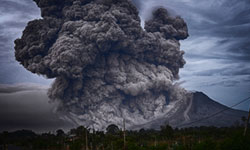
A single large eruption can darken skies on the other side of the planet and starve harvests a year later.
More than lava
Film loves flowing lava, but it is rarely the killer. The deadly hazards are pyroclastic flows — superheated avalanches of gas and ash moving at highway speeds — and lahars, volcanic mudflows that can bury valleys miles away.
Tambora killed perhaps ten thousand directly and tens of thousands more through the starvation that followed. A large eruption is also a climate event: ash and sulfur in the stratosphere can drop global temperatures for a year or more.
“The mountain gives warning. The question is whether anyone is listening.”
Lahars: the silent valley-killer
For the Pacific Northwest the greatest volcanic danger isn't an explosion — it's a lahar. These mudflows can be triggered even without an eruption and race down river valleys faster than people can drive.
The 1985 Nevado del Ruiz lahar killed more than 23,000 people in a single town. The defense is geography and warning: know whether you are in a lahar path, and know the route to high ground.
The Cascade arc
Oregon and Washington sit along a chain of active volcanoes — Mount Hood, Mount St. Helens, Mount Rainier, and more. Mount Hood looms about 50 miles from downtown Portland, and Mount St. Helens erupted catastrophically in 1980 within living memory.
Mount Rainier is considered one of the most dangerous volcanoes in the country because of the populated river valleys in its lahar path. If you live or travel near these valleys, learn the lahar evacuation routes.
Living near a sleeping giant
Volcanic preparedness blends earthquake and wildfire readiness: protect your lungs from ash, keep supplies for being cut off, and understand your evacuation routes.
Ashfall alone can collapse roofs, foul engines, and make the air dangerous to breathe for miles around — long after the eruption has ended.