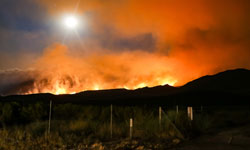
Fire is the disaster that now arrives every year, and its smoke reaches far beyond the flames.
Fire moves faster than you think
A wind-driven wildfire can advance faster than a person can run and throw embers a mile ahead of the flame front, starting new fires behind the defenders. The Peshtigo Fire generated its own firestorm, and the 2018 Camp Fire destroyed the town of Paradise, California in a few hours.
The lethal trap is waiting too long: roads choke, visibility drops, and an orderly evacuation becomes gridlock.
“When you're ready to go, it's already late. Leave early.”
Smoke is a disaster of its own
You don't have to be near the flames to be harmed. Wildfire smoke carries fine PM2.5 particles deep into the lungs and can blanket cities hundreds of miles away for weeks, as the Pacific Northwest has learned firsthand.
For the elderly, the young, and anyone with heart or lung conditions, smoke is often the deadliest part of fire season. A clean-air room with a good filter is now standard preparedness gear in the West.
The new fire reality
The 2020 Labor Day fires burned over a million acres in Oregon and gave Portland the worst air quality on Earth for days. What was once an occasional hazard is now an annual one across the region.
Even far from any fire line, plan for smoke every late summer and fall: a clean-air room, a HEPA filter, a supply of N95s, and a way to track the air-quality index in real time.
Defending home and lungs
Harden your home by clearing the defensible space immediately around it, screening vents against wind-blown embers, and keeping a go-bag ready throughout fire season.
For smoke, a HEPA purifier and well-fitted masks protect the people who can't simply leave — and a real-time air-quality alert tells you when to use them.