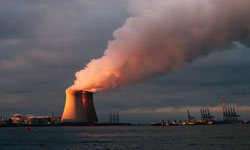
Nuclear accidents are rare and statistically safe — until one fails, and leaves land uninhabitable for centuries.
Rare, but uniquely persistent
Counted by direct deaths, nuclear accidents rank low among disasters — the immediate Chernobyl toll was in the dozens, with thousands more attributed to long-term cancers. What sets radiation apart is its persistence: contamination that lingers for generations and renders land unusable.
Fukushima in 2011 showed the modern shape of the risk: triggered not by reactor design alone but by a tsunami overwhelming the plant's defenses.
“Distance, shielding, and time — the three defenses against radiation.”
What to actually do
In a radiological emergency the guidance is unglamorous and effective: get inside, stay inside, and stay tuned. A building's mass blocks much of the radiation, and most fallout danger decays rapidly in the first hours and days.
Potassium iodide protects the thyroid from one specific isotope — it is not a cure-all, and it should only be taken when public-health authorities advise it.
Hanford & the grid
The Northwest's nuclear story is dominated by the Hanford Site in eastern Washington — a former plutonium-production complex that is now one of the most contaminated sites in the hemisphere and the focus of a decades-long cleanup.
Washington's Columbia Generating Station is the region's only commercial reactor. For most Portland-area residents, realistic “nuclear” planning is the same all-hazards readiness: the ability to shelter in place and a reliable source of official information.
Knowing your proximity
If you live near a nuclear facility, learn the emergency planning zones and the local alert system. The plan is the same as for many disasters: a way to shelter, a way to evacuate, and a way to get trustworthy information.
When rumors move faster than facts, a reliable radio and a pre-arranged family plan are worth more than any gadget.